2026-10-06 · Garrett Sullivan
Injection Foam vs Spray Foam for Existing Walls in OKC Homes
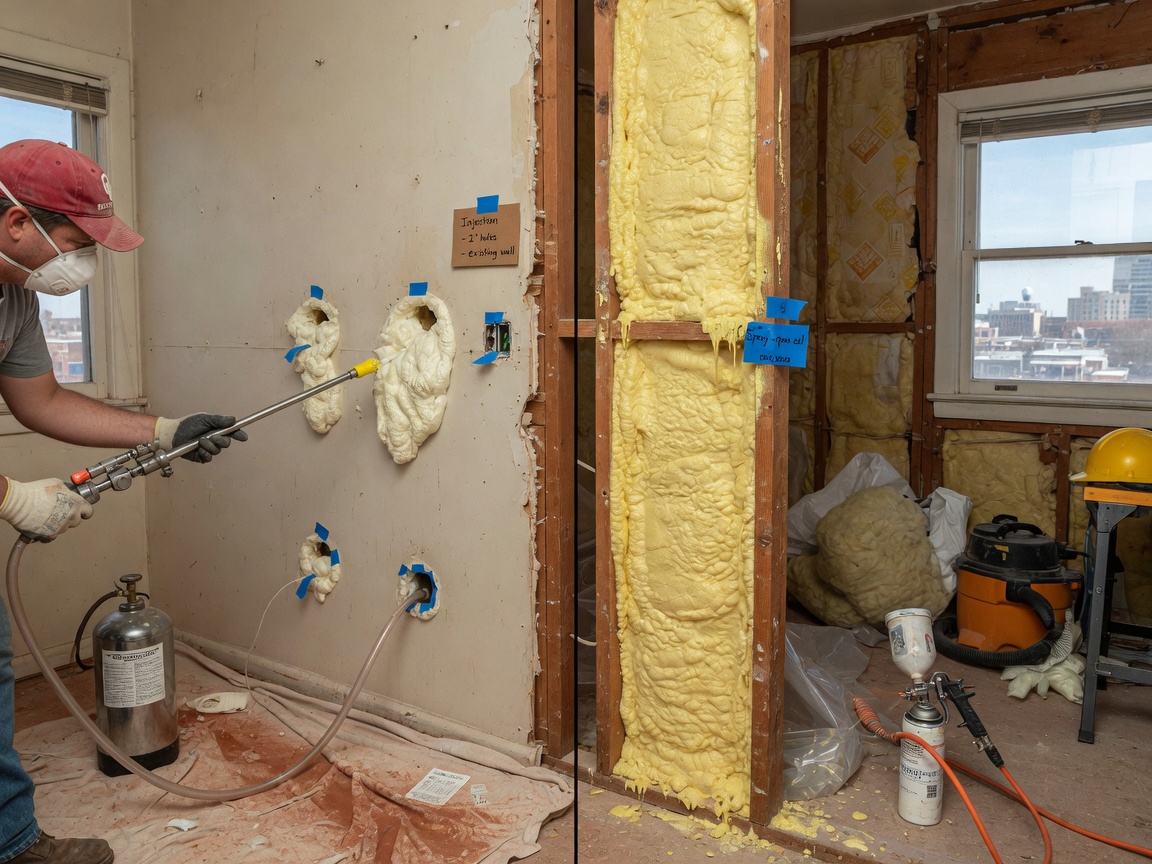
Injection foam is the more practical option for most existing walls in Oklahoma City homes because it installs through 1/2-inch holes drilled into drywall or siding and expands to fill closed cavities, whereas spray foam requires full stud exposure that usually means removing interior finishes.
How Oklahoma City Housing Stock Affects Wall Insulation Choices
Many homes built before 1980 in Midtown, Capitol Hill, and The Village feature plaster-over-lath or early drywall walls with narrow cavities that are difficult to access. These older structures sit on Oklahoma County soil that shifts with frequent severe thunderstorms, creating small gaps that let humid summer air and winter cold penetrate. Injection foam works well here because technicians can target each cavity from the exterior or through baseboards without disturbing historic finishes common in Bricktown and Deep Deuce properties. Spray foam, by contrast, suits newer tract homes in Moore or Midwest City where walls are already open during renovation. The closed-cell version of injection foam also adds modest structural strength against high winds that roll through the area each spring.
Climate Realities That Change the Job on the Ground
Warm humid summers followed by cold winters create repeated expansion and contraction cycles in Oklahoma County walls. Injection foam applied at 2-pound density resists moisture absorption better than open-cell spray foam when summer humidity spikes above 70 percent. In neighborhoods such as Warr Acres and Bethany, where many homes lack proper vapor barriers, the closed-cell barrier created by injection foam helps limit condensation on the interior side of exterior sheathing. Spray foam crews often need to add separate vapor retarders in these conditions, adding steps. Both materials handle the rapid temperature swings, but injection foam avoids the risk of trapping construction moisture inside cavities that have never been opened.
Installation Steps and Access Limitations
Technicians first locate studs with a density meter, then drill entry points every 16 inches along the top plate. They inject low-expansion foam until the cavity reaches the target density, usually confirmed by a pressure gauge reading. This process works from the exterior on brick homes common in Del City without disturbing interior paint. Spray foam requires removing drywall or exterior cladding first, then spraying in 2-inch lifts while monitoring for over-expansion that can bow older plaster. Homeowners in Edmond or Norman often choose injection foam when they want to keep rooms occupied during the work, since the method creates far less dust and debris than full wall tear-outs.
Performance and Long-Term Considerations
Both materials deliver R-values between 6.5 and 7 per inch once cured, yet injection foam in closed cavities tends to maintain that rating longer because it experiences less air movement around the foam edges. Rim joist areas remain a separate concern best addressed with dedicated attic or crawl space work. Readers exploring air sealing options may also want to review Rim Joist Insulation: The Most Overlooked Air Leak in Oklahoma City Homes. For walls that are already open during a remodel, the Wall Spray Foam Insulation page outlines full-cavity spray options that can tie into the same project.
Decision Factors for Oklahoma County Homeowners
Choose injection foam when walls remain finished and the priority is minimal disruption in neighborhoods with older stock. Select spray foam when a renovation already opens the cavities or when maximum air sealing is needed around complex framing details. Both approaches improve comfort during the cold winters and humid summers typical of the region, but the correct method depends on whether the wall cavities can stay closed during installation.