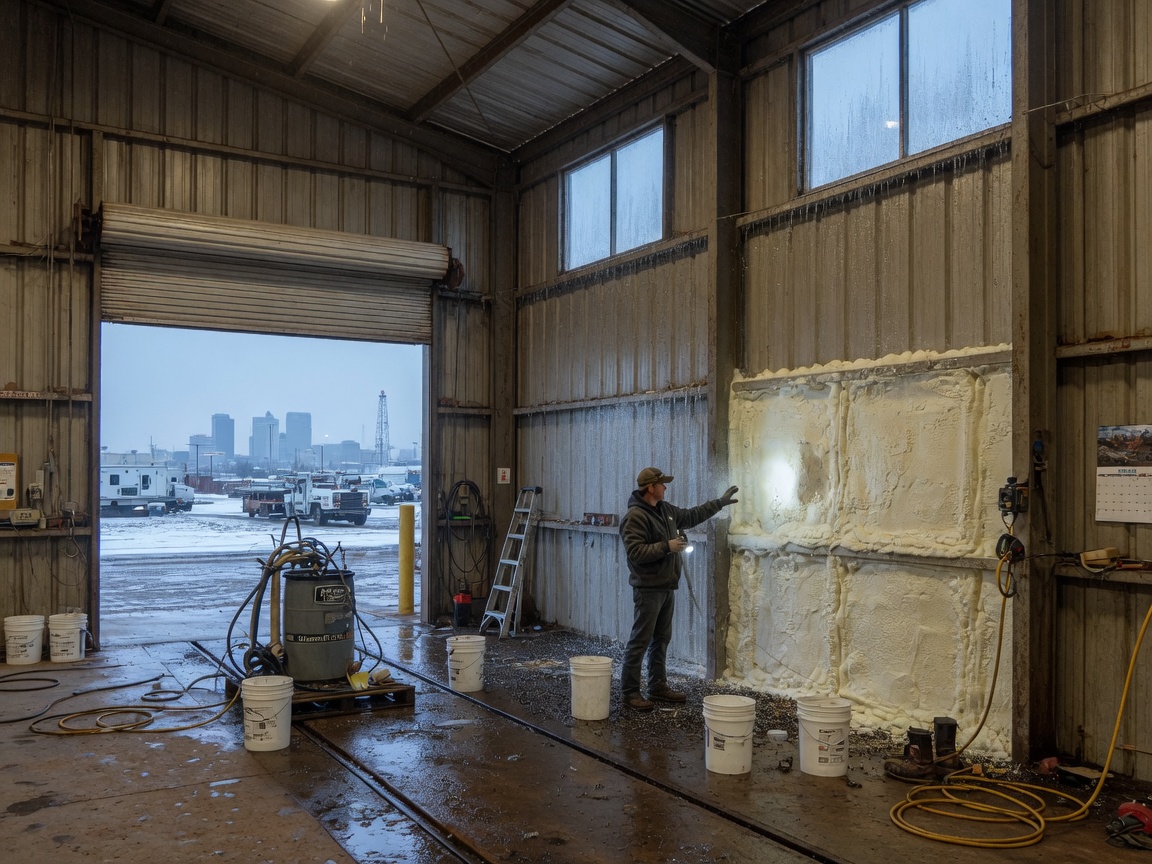
Norman homeowners along University Boulevard and Main Street often face attic heat gain in summer and rapid heat loss once winter arrives. Trusted Spray Foam OKC travels south on I-35 from 3401 N May Ave to seal rafters and rim joists in both pre-1970 brick homes near the University of Oklahoma and newer frame houses east of 12th Avenue. Closed-cell foam stops the humid air that rolls in with afternoon storms from reaching plywood decks.
Lots near Lake Thunderbird and in the Hall Park addition sit on clay soils that hold water after heavy rain. Spray foam applied to crawl spaces and rim boards keeps that ground moisture from migrating into floor systems. Crews arrive before 8 a.m. most weekdays so work finishes before evening thunderstorms move through Oklahoma County.
Residents in the Original Townsite and around Reaves Park notice lower HVAC runtime after open-cell foam fills wall cavities in older plaster homes. The same material also reduces sound from traffic on Lindsey Street for houses backing up to the university campus.
Around Norman
We regularly work near:
- 📍University of Oklahoma campus
- 📍Lake Thunderbird State Park
- 📍Reaves Park
- 📍Norman Depot on Main Street
- 📍Downtown Norman along Main Street
- 📍Norman Regional Hospital on 12th Avenue
Spray Foam OKC in Norman — Local Notes
- •Many Norman homes built before 1965 have balloon-framed walls that allow wind-driven rain from severe thunderstorms to reach interior sheathing; closed-cell foam creates an air and water barrier at the studs.
- •Clay-heavy soils around Lake Thunderbird expand and contract with seasonal moisture, shifting pier-and-beam foundations; spray foam at the rim joist limits air leakage that can dry out or over-humidify crawl spaces.
- •Houses near the railroad tracks and downtown Norman often have low-pitch roofs that collect ice in January; closed-cell foam under the deck reduces the temperature differential that leads to ice dams.
- •Newer subdivisions east of 24th Avenue SW use truss roofs with large attic volumes; open-cell foam applied to the underside of the roof deck brings the attic into the conditioned envelope without blocking soffit vents.